Black Women Solo Travel: Southeast Asia Guide

Southeast Asia calls to Black women solo travelers with a particular intensity: the cost of living is low, the food is extraordinary, and the landscapes range from dense jungle to white-sand coastlines. But the information most travel guides offer is written without you in mind. Questions about colorism, about being stared at, about finding hair care products, about knowing which cultural norms actually apply to you as a Black woman, these go unanswered in mainstream travel content. This guide fills that gap directly. Whether you are planning your first solo trip or your fifth, what follows is honest, specific, and built for the Black female traveler heading into the region.
Table of Contents
Quick Takeaways
Key Insight | Explanation |
|---|---|
Colorism exists and is visible | Skin-lightening products are widely sold and heavily marketed across the region. You may encounter comments about your complexion. Knowing this in advance helps you process it rather than be blindsided by it. |
Staring is common and not always hostile | In countries with very few Black residents, curiosity-driven staring is frequent. It is not always racism. Context matters: a smile back often breaks the moment. Persistent unwanted attention is a different issue. |
Research your neighborhood, not just your hotel | Where your accommodation sits within a city affects your safety and comfort far more than the room itself. Tourist-heavy districts tend to be more cosmopolitan and less likely to produce uncomfortable interactions. |
Pack all specialist hair products from home | Products for natural Black hair, particularly for 4A to 4C curl patterns, are extremely difficult to find outside of major international cities in Southeast Asia. Bring everything you need for the full trip. |
Protective styles are practical, not just stylish | Box braids, twists, and wigs dramatically simplify your routine in the heat and humidity. They also reduce the time you spend searching for products that do not exist in most local markets. |
Community research is your best pre-trip tool | Forums and groups built by and for Black women travelers give you granular, honest intelligence that generic travel sites never provide. Read them before you book, not after you arrive. |
Know when to leave | If an accommodation or neighborhood does not feel safe, move. No sunk cost is worth your wellbeing. Having a backup plan and accessible funds makes this possible. |
What to Expect as a Black Woman in Southeast Asia
The most important thing you can do before traveling to any country in Southeast Asia is to understand the social landscape as it applies specifically to you, not to women in general, and not to travelers of other backgrounds. The region is large and varied, and the experience of a Black woman in Bangkok is meaningfully different from her experience in Bali or Ho Chi Minh City.
Colorism Is a Real and Visible Force
Across much of Southeast Asia, particularly in Thailand, the Philippines, Vietnam, and Indonesia, lighter skin is heavily promoted as a beauty ideal. Skin-lightening creams are sold everywhere, including in convenience stores, and advertising routinely presents pale skin as aspirational. This cultural context shapes how some locals perceive and interact with darker-skinned visitors. As a Black woman, you may encounter comments about your skin color that are intended as neutral observations but land as microaggressions. Prepare for this mentally before you leave home.
Colorism is not uniform across the region. Bali, which receives an enormous volume of international visitors, tends to be far more cosmopolitan in its attitudes. The same is true of major tourist corridors in Thailand like Chiang Mai and Koh Lanta, where locals are genuinely accustomed to seeing people of all backgrounds. Smaller towns and rural areas anywhere in the region are more likely to produce staring, questions, and unsolicited commentary about your appearance.
Understanding the cultural attitudes of a destination toward race, gender, and sexuality before you arrive is not optional preparation. It is the foundation of a trip you can actually enjoy rather than just survive.
Being Stared At: How to Read It
You will be stared at in most of Southeast Asia, especially outside major tourist zones. In many cases, this is genuine curiosity from communities that have had little or no contact with Black people in person. That does not make it comfortable, but distinguishing between curiosity and hostility helps you respond proportionately. A calm, direct look back or a brief smile often ends the moment.
Where staring shifts into harassment, which is more common at night, in heavily touristy bar districts, or in areas with little foot traffic, the response is the same as anywhere in the world: move toward populated areas, use your phone as a navigation anchor, and do not hesitate to enter a shop or restaurant to create distance.


Requests to photograph you are common in rural areas and smaller cities. You are under no obligation to agree. A simple shake of the head accompanied by a polite no works in every language. Do not feel pressured by the assumption that you should be flattered.
Best Destinations for Black Women Solo Travel
Southeast Asia contains eleven countries with wildly different profiles for solo travel. Not all of them are equally welcoming or equally practical for a first-time solo Black female traveler. The destinations below are the ones most consistently reported as accessible, relatively safe, and manageable in terms of infrastructure.
Thailand: High Capacity, Uneven Experience
Thailand is the most visited country in Southeast Asia and has the tourism infrastructure to match. Chiang Mai is widely considered one of the most beginner-friendly solo travel destinations in the entire region. The city has well-maintained guesthouses, excellent public transport options, a walkable old city, and a thriving community of long-term international residents that normalizes diverse visitors. Bangkok offers more anonymity and more urban complexity, which suits experienced solo travelers better than first-timers.
The Thai islands vary significantly. Popular spots like Koh Lanta and Koh Phangan have very different vibes from each other, and nightlife-heavy islands bring their own risks, including drink spiking in crowded bars, which is a documented concern across the region and not specific to any one nationality of traveler.
Vietnam: Safe, Affordable, Occasionally Intense
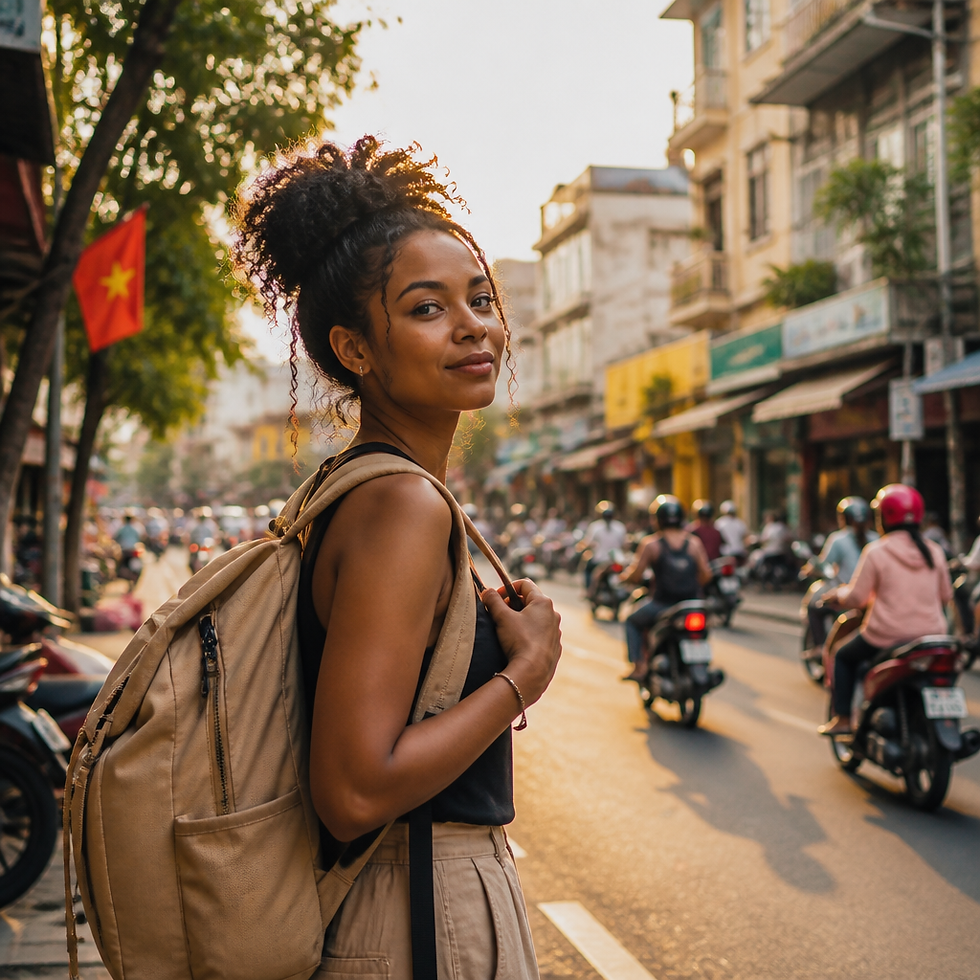
Vietnam has a strong reputation for personal safety in terms of violent crime. The primary day-to-day concerns are bag snatching from motorbikes, which is well-documented particularly in Ho Chi Minh City, and genuinely chaotic traffic that requires focused attention when crossing any road. The country offers remarkable value for money and has a well-established solo travel circuit running from Hanoi in the north through Hoi An to Ho Chi Minh City in the south. Hoi An in particular has a strong community of solo female travelers and a pace that suits methodical exploration.
Bali, Indonesia: Welcoming but Crowded
Bali occupies a unique position in Southeast Asia because its Hindu cultural foundation gives it a noticeably more relaxed and internationally open atmosphere than predominantly Muslim parts of Indonesia or more conservative parts of the region. The yoga and wellness community creates natural social opportunities for solo travelers. The concerns here are motorbike accidents, which are the leading cause of injury for tourists, drink spiking in party areas, and petty theft. Ubud and Canggu are significantly calmer than Kuta or Seminyak.
Pro tip: If you are planning a first solo trip and feel uncertain, build your itinerary around two or three well-researched destinations rather than trying to cover as many countries as possible. Depth of experience in fewer places is safer and more enjoyable than a rushed multi-country circuit where you never have time to build local knowledge.
Safety on the Ground
Safety as a Black woman solo traveler in Southeast Asia is not a single issue. It is a set of overlapping concerns that include petty crime, sexual harassment, racially charged interactions, and the practical problem of what to do when something goes wrong. Each requires a different approach.
Before You Leave: The Research Phase
The most effective safety work happens before you board the plane. Reading travel forums and communities created by and for Black women gives you the kind of granular, honest intelligence that generic travel sites cannot provide: which guesthouses have staff who are genuinely welcoming, which neighborhoods produce the most uncomfortable interactions, and which scams are currently circulating. This preparation does not eliminate risk, but it dramatically reduces the number of unpleasant surprises you encounter.
Hotel and guesthouse staff and local tour guides are underused resources once you arrive. They know which areas to avoid after dark and where they would personally feel comfortable. Ask directly. Most are willing to give honest answers to straightforward questions.
Accommodation Safety Specifics
Location within a city matters more than the quality of the room. An excellent guesthouse in an isolated or poorly lit neighborhood is a worse choice than a modest guesthouse in a busy, well-connected area. Read recent reviews specifically for comments on neighborhood safety and staff behavior, not just cleanliness. If reviews mention that single women felt uncomfortable or that staff were intrusive, believe those reviews.
When staying in dormitories, check whether the sleeping area is genuinely secured and whether the gender breakdown of the room matches what was advertised. If something does not feel right when you arrive, do not unpack. The cost of one wasted booking is far less than a week of low-grade anxiety about your sleeping arrangements.
Knowing When to Leave
One of the most important skills a solo traveler can build is the ability to cut losses and move. If a city, neighborhood, or accommodation is making you uncomfortable in ways you cannot resolve, leave. Have enough accessible funds and flexibility in your itinerary to make that a real option rather than a theoretical one. Emergency cash kept separately from your main wallet, a backup accommodation option researched in advance, and a clear sense of where the nearest transport hub is, all of these make leaving a practical choice rather than a crisis.

Pro tip: Download offline maps for every city before you arrive. Connectivity in rural Southeast Asia is unreliable, and being able to navigate without a data signal is a basic safety measure that costs nothing and takes two minutes to set up.
Accommodation: What Actually Matters
The accommodation landscape in Southeast Asia ranges from five-star resorts to backpacker hostels charging a few dollars a night. For a Black woman traveling solo, the most useful filter is not price or Instagram appeal. It is how inclusive the environment actually feels.
Read reviews written by solo women travelers specifically. If there are reviews from Black women or other travelers of color, those are particularly relevant to your experience. Look for comments about staff friendliness and whether guests felt genuinely welcomed rather than tolerated. A guesthouse with slightly older fixtures but warm, attentive, non-intrusive staff is almost always the better choice over a stylish property with mixed reviews about how management treats guests.
Guest houses and small boutique hotels in tourist corridors tend to be more accustomed to international visitors of all backgrounds than large chain properties in business districts, which are often oriented toward corporate travel rather than individual exploration. The former often provide more practical local knowledge, better connections to guides and transport, and a more human experience overall.
Packing, Hair Care, and Practical Prep
Hair care is a practical travel consideration that mainstream packing guides ignore entirely. For Black women with natural hair, this is not a minor detail. It is a logistical challenge that requires advance planning.
What You Cannot Buy There
Products formulated for 4A to 4C curl types, including leave-in conditioners, curl defining creams, edge control, and deep conditioning treatments, are extremely difficult to find in most of Southeast Asia. Major international cities like Bangkok, Kuala Lumpur, and Singapore have a better chance of stocking a limited range of products aimed at Black hair, but supply is unreliable and prices are significantly higher than at home. Do not assume you can source what you need after you land. Pack everything you will need for the full duration of your trip, accounting for the heat and humidity, which will affect your routine.
Protective Styles Are the Practical Choice
Box braids, cornrows, faux locs, mini-twists, and wigs all dramatically reduce the daily effort required to manage your hair in a hot, humid climate. They also eliminate the product-sourcing problem almost entirely. If you choose braids or twists, get them installed before you leave, and pack the specific products you need for maintenance and scalp care. If you are wearing a wig, pack a lightweight silk or satin liner for comfort in the heat. A large swim cap designed for thick or textured hair is worth including if you plan to spend time in pools or the ocean.
Packing for the climate more broadly means prioritizing lightweight, breathable fabrics. Southeast Asia is hot and humid year-round in most of the region, with a distinct wet season that varies by country. Moisture-wicking fabrics and quick-dry options reduce discomfort significantly. A lightweight scarf or shawl is essential: it covers your shoulders and knees when entering temples, protects you from air conditioning that runs aggressively cold in many indoor spaces, and doubles as a beach wrap.
Navigating Transportation
Transportation in Southeast Asia is one of the areas where preparation pays off most clearly. The options range from excellent (Singapore's MRT, Thailand's intercity trains) to chaotic and occasionally dangerous (motorbike taxis in dense urban traffic, overnight buses on mountain roads).
Ride Apps vs. Street Taxis
In Thailand, Indonesia, and Vietnam, app-based ride services are available in major cities and significantly safer than flagging an unmarked taxi from the street. The reasons are straightforward: the fare is set in advance, the driver is traceable, and you have a record of the journey. Avoid unmarked taxis that approach you at airports or tourist sites. These are the source of the overwhelming majority of tourist overcharging incidents and occasional safety incidents involving female travelers.
Overnight Buses and Trains
Overnight buses are cheap and save you a night's accommodation cost, but they carry risks for solo female travelers: minimal security, unvetted fellow passengers, and no control over stops. Overnight trains are generally a better option where they exist: compartments offer more privacy, the route is fixed, and train staff are present throughout the journey. Book a sleeper berth in a female-only carriage if that option is available on your route.
Motorbike taxis and renting your own scooter are popular with experienced travelers but carry genuine risk. Motorbike-related accidents are among the most common causes of serious injury for tourists across the region. If you are not an experienced rider, do not learn in Southeast Asia traffic. It is not worth it.
Destination Comparison
The table below compares three of the most popular destinations for Black women solo travel in Southeast Asia across dimensions that matter specifically to this group of travelers.
Destination | Best For | Key Considerations for Black Women |
|---|---|---|
Chiang Mai, Thailand | First-time solo travelers, longer stays, budget travel | Highly cosmopolitan tourist infrastructure; colorism exists but less confrontational than smaller cities; good transport links; no specialist Black hair products available locally |
Hoi An, Vietnam | Cultural immersion, slower pace, solo travelers wanting community | Strong solo female traveler community; bag snatching less common here than in Ho Chi Minh City; traffic is a real hazard; very limited hair product availability; staring is common outside the tourist center |
Ubud, Bali | Wellness-focused travel, spiritual retreats, social connection | Hindu cultural base makes it more open than other Indonesian destinations; strong international community reduces novelty-staring; motorbike risk is real; hair products largely unavailable; higher cost than most of SE Asia but still affordable |
Frequently Asked Questions
Is Southeast Asia actually safe for Black women traveling solo?
Yes, with preparation. Southeast Asia is broadly considered one of the safer regions in the world for solo female travelers in terms of violent crime. The risks that are most relevant to Black women specifically include racial microaggressions, colorism-driven interactions, and the general risks facing all solo women travelers such as petty theft and sexual harassment in certain environments. None of these make the region unsafe by any reasonable standard, but they do require awareness and preparation that mainstream travel guides rarely provide.
Will I experience racism in Southeast Asia?
You may encounter colorism, curious staring, unsolicited comments about your skin or hair, and occasional microaggressions. Overt hostility is uncommon in tourist areas. The nature of racial dynamics in Southeast Asia is different from what Black women typically navigate in the West: it is often rooted in cultural unfamiliarity with Black people rather than the specific historical racism of Western contexts. That distinction does not make individual encounters painless, but it does affect how you read and respond to them.
Where can I find hair products for natural Black hair in Southeast Asia?
The honest answer is: do not count on finding them. Major cities like Bangkok, Singapore, and Kuala Lumpur have international supermarkets and beauty supply stores that may stock a limited range of products, but availability is inconsistent and prices are high. The practical approach is to pack everything you need for the full duration of your trip. Protective styles that minimize daily product use are the most effective solution for extended trips.
Which Southeast Asian country is best for a first solo trip as a Black woman?
Thailand, specifically Chiang Mai, is the most consistently recommended starting point. It has well-developed tourism infrastructure, relatively easy navigation for English speakers, a huge range of accommodation options at every price point, and a cosmopolitan tourist community that normalizes international visitors. Vietnam, particularly the Hoi An to Hanoi corridor, is a close second for travelers willing to navigate slightly more complex logistics. Bali is excellent if wellness and slower travel are your priorities.
How do I connect with other Black women travelers in Southeast Asia?
The most effective way to build connections before you travel is through online communities created by and for Black women travelers. These spaces give you firsthand, honest accounts of specific destinations, accommodation recommendations, and warnings about situations to avoid. Once you are on the ground, staying in well-reviewed guesthouses and boutique hotels in tourist corridors naturally creates opportunities to meet other solo travelers. Co-working spaces and wellness centers in popular destinations like Chiang Mai and Ubud also function as genuine social hubs.
Is it safe to travel solo at night in Southeast Asian cities?
Night safety varies significantly by city and by specific neighborhood within a city. As a general principle, busy, well-lit streets in tourist areas are manageable at night. Isolated streets, poorly lit alleys, and areas dominated by nightlife and heavy alcohol consumption carry elevated risk for any solo woman. Use app-based ride services rather than walking long distances alone at night. Trust your own discomfort: if a street or situation feels wrong, leave it. No experience is worth overriding your instincts.
What should I wear at temples and religious sites?
Most temples and religious sites across Southeast Asia require shoulders and knees to be covered on entry. This applies to everyone regardless of nationality or background. A lightweight scarf or shawl carried in your bag is the simplest solution: you can wrap it around your shoulders or waist as needed and remove it once you leave. Many major temple sites have shawls available to borrow at the entrance, but bringing your own means you are never turned away or caught unprepared.
Have you traveled solo in Southeast Asia as a Black woman? Share the destination, the one thing you wish you had known before you went, and whether you would return.


Comments