Black Traveler in Ho Chi Minh City: Culture Shock Guide

A Black traveler in Ho Chi Minh City will notice things that most guidebooks skip. You will be looked at, sometimes for a long time, and some of the comments you hear will focus on your skin rather than your clothes. Online, Black visitors ask the same question again and again: will I face racism here? The honest answer is more complicated than yes or no. Your first week will shape most of your opinion of the city, so it helps to know what to expect on arrival, how to handle attention, what the traffic and noise will feel like, and how the war history shapes the sites you will visit.
Table of Contents
Quick Takeaways
Key Insight | Explanation |
|---|---|
Expect attention, not just hostility | Most visitors describe curiosity, stares and direct questions about where they are from. Plan a calm, friendly response so you do not escalate a simple moment. |
Use ride-hailing apps from the airport | Confirm the driver name and plate number in the app before you get in, and ignore anyone who approaches you in the arrivals area offering a ride. |
Save your hotel address in Vietnamese | Many drivers and vendors read Vietnamese faster than English. A screenshot saved offline protects you when your phone signal drops. |
Cross the street at a steady pace | Traffic does not stop for pedestrians. Walk at a constant speed and do not stop or change direction halfway across. |
Carry small bills | Street vendors often cannot break large notes, and small denominations keep payments quick and avoid awkward standoffs. |
Prepare before the war sites | Read some history before you go, and check how you feel about enclosed spaces before you enter the tunnels. |
Choose a neighborhood with your pace in mind | The central district suits first-timers who want walkable options, while quieter areas suit longer stays and people who want fewer crowds. |
First Impressions on Arrival
The first thing most visitors notice is the volume. Scooters move in dense streams, horns are used as a way of signaling your presence rather than as anger, and the street outside your hotel may stay loud well past midnight.

Ride-hailing apps are the sensible way out of the airport. Set your pickup point in the app, check the driver name and plate before you get in, and turn down anyone who approaches you inside the terminal offering a ride.
Getting from the airport to your hotel
Arrival is where first impressions form fastest, so set yourself up before you land. Download a ride-hailing app ahead of time, add a payment method that works, and make sure your phone can receive data. Waiting for a ride with a dead phone is the moment when a scam or a bad driver is most likely to find you.
Your first 48 hours
Spend your first morning walking a short loop near your hotel instead of planning a packed sightseeing day. Your body will be on the wrong clock, and the heat and humidity take longer to adjust to than most people expect.
Pro tip: Save your hotel address in Vietnamese as well as English and keep a screenshot offline. A phone with no signal is a bad time to discover that a driver cannot read the English address you typed.
Race, Stares and Being Looked At
This is the question Black travelers search for most often, and it deserves a direct answer. Most of your interactions will be curiosity, attention and the occasional clumsy comment rather than open hostility. Still, the uncertainty is real, and a question posted on the Vietnam subreddit asking whether Black tourists will face racism is a good snapshot of what travelers bring with them.
Why people stare
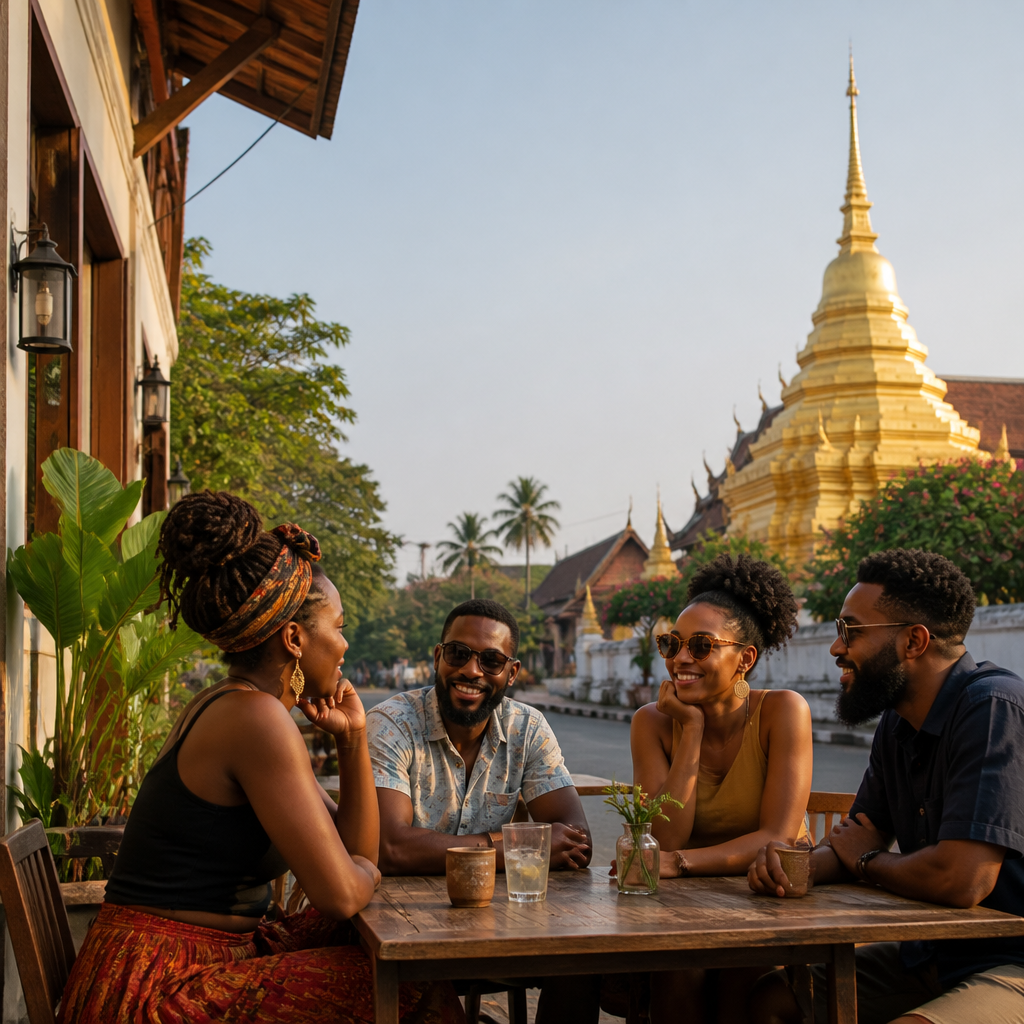
Many residents, especially outside the busy tourist core, have had limited everyday contact with Black visitors. In practice, that means you may simply be the most visible person in a café, a market or a photo. Staring is often plain curiosity, but it can still feel uncomfortable if you are not expecting it.
Some people will take photos of you without asking. Your best response is a smile and a wave, which usually ends the moment. Making a scene over a photo rarely changes anything and often draws more attention.
Handling comments without escalating
A short, friendly reply usually closes the exchange. Saying hello, answering a question about where you are from, or simply laughing off a comment tends to work better than confronting someone. A stranger who feels embarrassed rarely becomes a second conversation, but a stranger who feels challenged often does.
A tour operator who replied in a TripAdvisor forum thread on racism in Ho Chi Minh City said they receive African-American travelers often and that their guides enjoy working with them. One operator's experience is not a guarantee, but it does suggest the tourism trade is used to American visitors of many backgrounds.
Pro tip: If a comment turns into harassment, walk into a hotel lobby, café or shop and ask staff for help. Staff in tourist-facing businesses can often step in faster than a stranger on the street.
Culture Shock: Traffic, Noise and Pace
Crossing the street is the moment that tests every visitor. Traffic rarely stops for pedestrians, so you have to walk slowly, steadily and predictably while motorbikes flow around you. Once you stop treating the road as a set of obstacles and start treating it as a flow, the city becomes much easier to move through.
Crossing the street without freezing
Step off the curb at a steady pace and keep going. Drivers anticipate a walker who keeps a constant speed, not one who stops halfway or changes direction. Crossing alongside a local family or a small group makes the process easier, since drivers adjust around the group.
Noise, heat and the hours that matter
Life runs late here. Cafés and street stalls are busiest in the evening, and early mornings are quiet only in certain neighborhoods. Build your day around the cooler hours, do the walking early, and rest during the afternoon heat rather than pushing through it.
Language barrier and everyday English
English is spoken widely in hotels and the tourism sector, but much less in local markets and small family-run shops. Learn a few phrases before you go: xin chào for hello, cảm ơn for thank you, and bao nhiêu tiền for how much. Pointing, smiling and using a translation app will get you further than most travelers expect.
Food, Money and Daily Logistics
Street food is the highlight of most trips, and it is also where first-time visitors feel most conspicuous. Pull up a low plastic stool, point at what the people next to you are eating, and accept that your first meal will be a little messy. That mix of discomfort and delight is part of the experience.

Eating at street stalls
Choose stalls with a steady stream of local customers. Fast turnover usually means fresher food and quicker service, and regular customers are often happy to show you what to order. If a stall has no one eating there, keep walking.
Be ready for small plastic chairs, shared tables and loud conversation. Ask for the dish without ice or herbs if you are not sure about them, and keep hand sanitizer in your bag for the moments between courses.
Money, cards and cash
Cash still runs street food and small shops, while larger hotels and restaurants accept cards. Keep small notes in several denominations, because vendors often cannot break a large bill. Withdraw from bank machines inside banks or hotels where possible rather than from standalone machines on the street.
Getting around without a car
Ride-hailing apps are the simplest option for most visitors, and metered taxis are easier to find in the center. Confirm the destination in the app before you get on, and avoid any driver who proposes a price on the spot instead of using the app.
Pro tip: Carry small bills so that paying a vendor does not turn into a negotiation over change. Having exact money also shows a seller that you know the local rhythm.
History Beneath the Surface
Many Black American visitors come to Ho Chi Minh City for the war history, and that history carries more weight than a checklist of sites. The Vietnam War shapes almost every museum and memorial, and many exhibits present events from a perspective that may feel very different from what you learned at home. Going in with that expectation makes the visit more useful.
The underground tunnels
One of the most stressful parts of a visit for many travelers is going into the underground tunnels to see how Vietnamese families lived and built homes beneath the ground. The passages are narrow, the air is hot, and the space can feel close very quickly. Go early in the day, follow the group pace, and be honest with yourself about how you handle enclosed spaces before you commit.
Shared history: Black movements and Vietnam
Writers have long connected the American civil rights movement with Vietnamese independence struggles. An essay on the Black Agenda Report website about Ho Chi Minh and Martin Luther King Jr. argues that the two men helped create conditions for Black people to see themselves in the anti-colonial movements of Asia, and for Asia to see the Black freedom struggle in return.
A University of Kansas blog post by a Vietnamese-American writer examines the Black Panther Party's connections to Ho Chi Minh, and the writer openly says that some links deserve further exploration. Reading one of these pieces before your trip gives you more context at each site, and it helps you ask sharper questions when you talk with guides.
The history in this city is not one story told from one side. A little reading before you visit lets you hold several perspectives at once, which makes every site more memorable.
Choosing Where to Stay
For Black expats in HCMC and for visitors alike, the neighborhood you choose changes daily life more than almost anything else. A central base puts you within walking distance of museums, restaurants and nightlife, but it also means more foot traffic and more attention. A quieter area gives you space to rest, which matters if you are dealing with stares every day.
District 1 for first-timers
District 1 is the tourist-heavy core and the easiest area for a first visit. You will find many hotels, restaurants and bars, plus plenty of tour options. The trade-off is that you will be looked at more often, so expect a steady stream of attention when you walk the main streets.
Quieter residential areas for longer stays
Residential districts outside the center suit longer stays and people who want fewer crowds. Daily errands, such as buying groceries or getting a haircut, become routine rather than novel, and neighbors often become familiar faces over a few weeks. Expect a longer walk to the main attractions, and plan on ride-hailing for most trips.
Reading reviews for host behavior
Read recent reviews, and look for mentions of how staff treat guests, not just how clean the room was. A review that mentions staff intervening during a problem tells you more than a five-star rating alone. If you are booking a homestay, ask the host directly how they welcome guests from abroad before you commit.
Choosing How to Explore the City
You do not have to pick one way to see Ho Chi Minh City. Most visitors combine a few approaches, depending on the day and their comfort level. The key is deciding in advance how much independence you want, since that choice affects how much attention you get and how much control you have over the pace.

Comparing your options
The table below compares three common approaches. Independent walking gives you the most freedom and the most exposure to everyday street life. Small-group tours offer context and built-in company, while private guides give you control over pace and focus, provided you book with a reputable operator and confirm what the day includes before you pay.
Approach | Best for | Watch out for |
|---|---|---|
Independent walking and ride-hailing | Travelers who want flexibility, street food and time to observe daily life | Constant attention on foot, and the need to plan routes and crossings yourself |
Small-group history tour | First-timers who want context at the war sites and company on the road | Fixed schedules, and a group pace that may not suit you on a hot afternoon |
Private guide booked in advance | Visitors who want a tailored itinerary, a focus on Black history or a slower pace | Higher cost, and the need to vet the guide carefully before you book |
Frequently Asked Questions
Will a Black traveler face racism in Ho Chi Minh City?
The most common experience is attention and curiosity rather than hostility, including stares, photos and direct questions. Accounts vary from person to person, so prepare for both a friendly reception and the occasional uncomfortable comment. A calm response and help from staff in hotels or shops will handle most situations.
Is Ho Chi Minh City safe for Black American travelers?
In practice, the everyday risks in the city are traffic and overcharging, and those affect every visitor. Use ride-hailing apps, keep valuables out of sight on the street, and confirm prices before you agree to anything. Race is more often a source of attention than of targeted danger.
Do I need to learn Vietnamese before I visit?
You do not need to become fluent, but a handful of phrases makes a real difference. Learn hello, thank you and how much, and use a translation app for anything more complicated. Locals notice the effort, and it often softens the mood in small shops.
Are the war history sites worth visiting?
Yes, but go with preparation. Read some background first, plan for heat and crowds, and decide in advance how you will handle the tunnels if enclosed spaces make you uneasy. Many visitors find that the history adds depth to the rest of their trip.
How should I respond when someone takes my photo without asking?
A smile and a wave usually end the moment. Making a scene rarely changes anything and tends to draw more attention to you. If the photo-taking turns into harassment or someone follows you, move to a hotel, café or shop and ask staff to help.
Have you visited Ho Chi Minh City as a Black traveler, and how did your first few days compare with what you expected? Share your experience in the comments so other readers can plan with real details.


Comments