Black Travel Atlanta: Why ATL Is Every Global Traveler's Base

If you have ever planned an international trip and wondered where to anchor your journey, the answer is simpler than most travel guides admit: Atlanta. Black travel Atlanta is not a niche category or a marketing tagline. It is a lived reality for millions of travelers who return to ATL again and again, not just because of Hartsfield-Jackson's unbeatable flight connections, but because Atlanta is one of the few cities on Earth where Black excellence, Black history, and Black joy are woven into every neighborhood, every plate of food, and every block of the skyline. This guide lays out exactly why ATL earns the title of ultimate home base for the global Black traveler.
Table of Contents
Quick Takeaways
Key Insight
Explanation
ATL is the world's busiest airport
Hartsfield-Jackson connects to over 245 destinations, making it the most practical launching pad for international Black travel.
Atlanta hosts the largest HBCU consortium in the US
The Atlanta University Center brings together Clark Atlanta, Morehouse, Morehouse School of Medicine, and Spelman under one roof, creating a cultural gravity that no other city can match.
Sweet Auburn is America's original Black Wall Street
Auburn Avenue was once called "the richest Negro street in the world" by Fortune Magazine and remains the spiritual center of Atlanta's civil rights identity.
Black-owned restaurants are world-class, not just symbolic
Spots like Busy Bee and Twisted Soul Cookhouse hold MICHELIN recognition, proving Atlanta's Black culinary scene competes at the highest level.
The city hosts anchor Black travel events year-round
BronzeLens Film Festival, National Black Arts Festival, and HBCU homecoming seasons give travelers specific hooks to plan trips around.
Multiple neighborhoods offer distinctly different Black travel experiences
West End, Sweet Auburn, Cascade Road, and West Midtown each have their own character, history, and dining scene worth separate visits.
ATL is a genuine stop, not just a layover
Building two to three days in Atlanta before or after an international flight transforms a connection into a full cultural experience.
Atlanta as the Black Mecca: More Than a Nickname
Atlanta earned the title "Black Mecca" through decades of deliberate community building, political power, and cultural output. This is the city that produced the Civil Rights Movement's most transformative figures, that built the most concentrated cluster of HBCUs in the United States, and that continues to generate cultural exports, from film production to music to fashion, that shape global Black identity.
The framing matters for travelers. Atlanta does not perform Black culture for visitors. It is a Black city in the fullest sense: Black-led government, Black-owned institutions, Black neighborhoods with generational roots, and a creative class that is actively, visibly building something. When you land in ATL, you are not visiting a museum. You are stepping into a living city.
Atlanta supports a bold expression of Black heritage and contemporary aspirations that spark Black excellence and pride. It is the heartbeat of the Civil Rights Movement and home to the largest collection of historically Black colleges and universities in the country.
For the global Black traveler who moves between continents and compares destinations with a critical eye, Atlanta offers something specific: affirmation and ambition in the same zip code. You leave feeling like the ceiling is higher than you thought. That is not an accident. It is infrastructure.

Hartsfield-Jackson: The World's Best Gateway for Black International Travel
Let's address the practical reality first. Hartsfield-Jackson Atlanta International Airport is the world's busiest airport by passenger volume, serving over 100 million travelers per year and connecting to more than 245 destinations. For the Black traveler who wants to move between the African diaspora, West Africa, the Caribbean, Europe, and Southeast Asia, no airport in the United States offers more direct routing options from a single hub.
The strategic advantage is real: you can fly into ATL from Accra, Lagos, Kingston, or London, spend two or three days experiencing Atlanta's Black culture, and then connect onward to another destination. The layover becomes the trip. A common mistake among travelers is treating ATL as a pass-through. Turning that transit window into a genuine city stay costs little extra and returns enormous cultural value.
Pro tip: Book your international flights with at least a 48-hour buffer in Atlanta on either end of your trip. Use that window to ground yourself in a city that will remind you why Black global travel matters, then carry that energy to your next destination.
Direct Routes That Matter for the African Diaspora
ATL offers direct flights to destinations across West Africa, the Caribbean, and Latin America that many East Coast and West Coast airports simply do not serve as frequently. For Black travelers specifically interested in roots travel, heritage tourism, and diaspora connections, building your routing around Atlanta as the hub is not just convenient. It is often the most affordable and most direct option available.
Atlanta Black Culture by Neighborhood
Atlanta's Black neighborhoods are not interchangeable. Each carries a distinct energy, history, and visitor experience. Treating the city as a monolith means missing most of what makes it worth the trip.
Sweet Auburn: The Spiritual and Historical Core
Sweet Auburn, centered on Auburn Avenue, is where Atlanta's Black history is most concentrated and most legible. The name itself was coined by civic leader John Wesley Dobbs, who served as the neighborhood's unofficial mayor. In 1956, Fortune Magazine called Auburn Avenue "the richest Negro street in the world," and the street earned that title through an extraordinary concentration of Black-owned businesses, financial institutions, entertainment venues, and churches. The Martin Luther King Jr. National Historical Park, Ebenezer Baptist Church, and the King Center for Nonviolent Social Change are all located here.
Walking Sweet Auburn is not optional for the serious Black traveler. It is the baseline. Everything else in Atlanta's Black cultural landscape grew from what was built here.
West End: Pro-Black, Rooted, and Walkable
West End is one of Atlanta's most spiritually rich and actively pro-Black historic neighborhoods. It sits close to the Atlanta University Center campuses and carries the energy of a community that is both deeply rooted and actively evolving. The neighborhood is known for beautiful Victorian homes, vibrant street art murals, and a concentration of Black-owned small businesses. It is the kind of neighborhood where you walk in to grab coffee and end up in a two-hour conversation about Atlanta's future.
Cascade Road: Down-Home and Nationally Known
Cascade Road carries a reputation for food that extends well beyond Atlanta. The strip along Cascade is home to restaurants that serve Cornish hens, oxtails, and rice, and have drawn visitors from across the country for decades. This is not the trendy dining scene. It is the legacy dining scene, and the distinction matters.
West Midtown: Where Black Creativity Meets Contemporary Dining
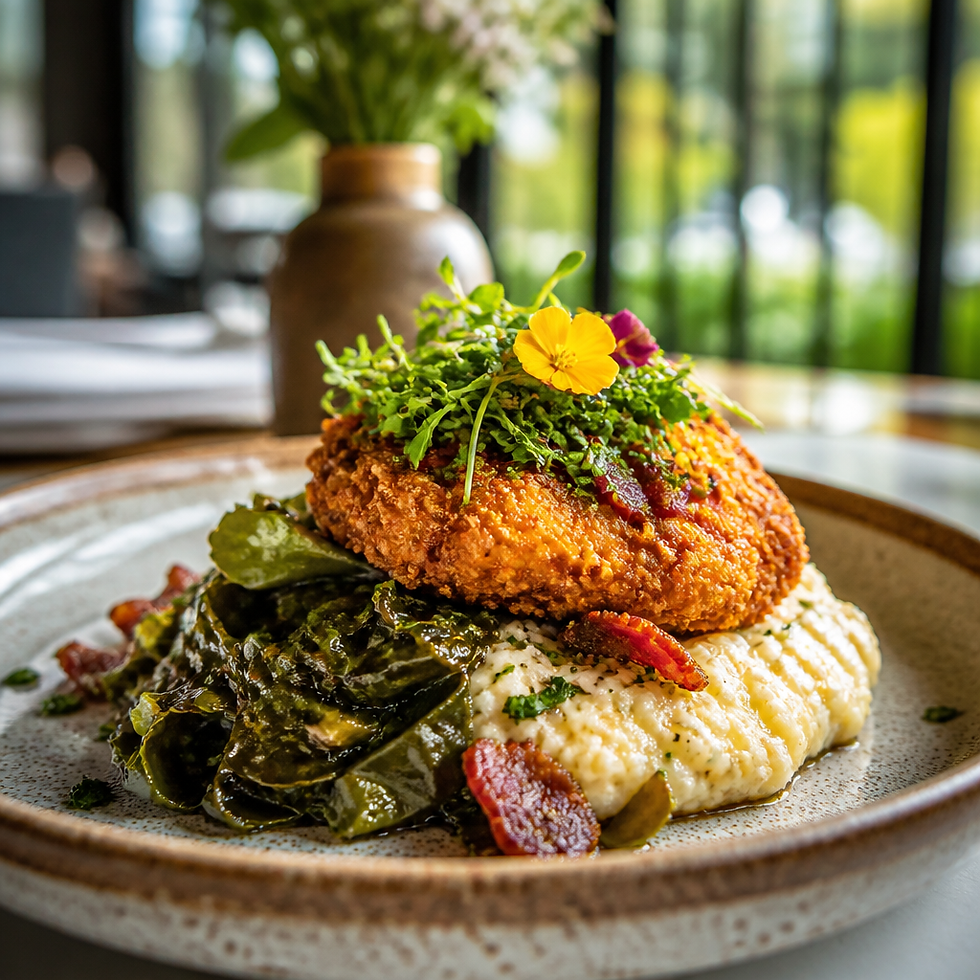
West Midtown has emerged as the address for Atlanta's Black culinary innovators. Chef Deborah VanTrece's Twisted Soul Cookhouse and Pours is based here, serving what she describes as modern global soul food, with dishes that pull from African, Asian, and Southern culinary traditions. This neighborhood rewards visitors who want to see how Atlanta's Black creative class is pushing the culture forward.
Black-Owned Dining That Demands a Detour
Atlanta's Black food scene has moved well past "good for what it is" territory. It is simply good, full stop, and several restaurants have earned the institutional recognition to prove it.
The Busy Bee, located at 810 Martin Luther King Jr. Drive SW, received the MICHELIN Bib Gourmand designation in 2023, 2024, and 2025. That award recognizes restaurants that deliver exceptional food at moderate prices, which is exactly the sweet spot for the budget-conscious Black traveler who refuses to compromise on quality. Busy Bee is also planning an additional location in Centennial Yards, expanding its reach within the city.
For coffee culture with neighborhood character, Coffee Was Black on Auburn Avenue brings Caribbean coffee and patties to the heart of Sweet Auburn. Cafe Bartique in Cascade names its drinks after local landmarks, colleges, and celebrities, which tells you everything about the community focus. Urban Grind in West Midtown runs social events alongside its coffee service, making it a genuine gathering space rather than just a cafe.
Pro tip: Atlanta's Black Restaurant Week is an annual event that concentrates deals, pop-ups, and exposure to newer Black-owned spots that may not yet have the marketing reach of established names. Plan a trip around it and you will eat very well for very little.

The HBCU Experience: A Cultural Anchor Unlike Any Other
The Atlanta University Center is the largest consortium of HBCUs in the United States, bringing together Clark Atlanta University, Morehouse College, Morehouse School of Medicine, and Spelman College in close geographic proximity. No other city in America concentrates this much HBCU energy in one place.
For the Black traveler, especially one who attended an HBCU or wishes they had, the AUC campus area is a specific kind of pilgrimage. You are walking through the physical evidence that Black academic excellence has always existed, has always been intentional, and has always produced leaders. The campuses are open and welcoming to visitors, and the surrounding West End neighborhood amplifies the experience.
Homecoming Season as a Travel Event
HBCU homecoming season in Atlanta is a legitimate Black travel event. When Morehouse, Spelman, and Clark Atlanta hold their homecomings, the city fills with alumni networks, performers, and travelers who plan their entire fall calendar around these dates. Accommodation books out weeks in advance. If you have not experienced an Atlanta HBCU homecoming, treat it as a bucket-list trip, not a maybe-someday.
Must-Attend Events for the Black Travel Calendar
Atlanta's event calendar gives the Black traveler specific anchors around which to build a trip. These are not peripheral cultural events. They are major productions that draw regional and national audiences.
The BronzeLens Film Festival celebrates Black film and filmmakers from across the diaspora. The National Black Arts Festival is one of the largest celebrations of African American arts in the world. Black Restaurant Week spans multiple weeks and spotlights Black-owned food businesses across metro Atlanta. And then there is the HBCU homecoming calendar, which runs through the fall and creates multiple distinct travel windows.
The practical advantage of building your trip around an event is that you arrive with an instant social context. You are not a tourist figuring out where to go. You are a participant in something larger. That shift changes the quality of the entire trip.
Planning Your ATL Home Base Trip: Practical Advice
Atlanta is a sprawling city that rewards intentional planning. A common mistake first-time visitors make is trying to see everything in a single visit. The smarter approach is to pick two or three neighborhoods per trip and go deep rather than wide.
Where to Stay Based on Your Priorities
If your priority is civil rights history and walkability to Sweet Auburn, look for accommodation in Downtown or Old Fourth Ward. If HBCU culture is the draw, staying near the West End puts you within walking distance of the AUC campuses. If dining and contemporary culture are the focus, West Midtown or Midtown proper offers the densest concentration of Black-owned creative businesses. Each base camp gives you a different Atlanta.
Budget Considerations for ATL
Atlanta is genuinely more affordable than many comparable major American cities. Hotel options range from budget-friendly options near the airport for transit travelers to boutique properties in Midtown for those who want the full city experience. The city's restaurant scene has strong representation at every price point, from MICHELIN-recognized spots with moderate pricing to legendary neighborhood institutions where a full meal costs very little. The traveler who plans ahead can experience the best of Atlanta without a premium-city budget.
Pro tip: If you are flying internationally out of ATL, book your departure flight for the afternoon rather than the morning. This gives you time for a final breakfast at a Black-owned spot before you leave, and that small act of intention makes the trip feel complete rather than rushed.
ATL vs. Other Domestic Black Travel Hubs
Category
Atlanta (ATL)
Washington, D.C.
Houston, TX
Airport connectivity
World's busiest airport, 245+ destinations, strong Africa and Caribbean routes
Strong East Coast hub, good transatlantic connections
Strong Latin America and Gulf connections, growing Africa routes
HBCU presence
Largest HBCU consortium in the US (AUC: Morehouse, Spelman, Clark Atlanta)
Howard University, one flagship institution
Texas Southern University, Prairie View nearby
Civil rights heritage
Birthplace of MLK, Sweet Auburn, King Center, immersive neighborhood context
National Mall monuments, Smithsonian National Museum of African American History and Culture
Strong Juneteenth heritage, Buffalo Soldiers history
Black-owned dining scene
MICHELIN-recognized spots, multiple distinct neighborhood dining cultures
Strong scene in Shaw and H Street corridor
Growing Third Ward scene, established Creole and Southern influence
Cost of travel
More affordable than comparable cities, strong budget options
Higher hotel costs, especially near monuments
Competitive pricing, especially for accommodation
Black travel events
BronzeLens, National Black Arts Festival, HBCU homecoming season, Black Restaurant Week
Howard homecoming, Essence Fest satellite events
Juneteenth celebrations, Houston Livestock Show
Frequently Asked Questions
Why is Atlanta called the Black Mecca?
Atlanta earned the "Black Mecca" title through a combination of factors that no other American city replicates: the largest consortium of HBCUs in the country, a sustained tradition of Black political leadership, a nationally significant civil rights geography centered on Sweet Auburn and the King legacy, and a Black creative class that continues to shape American culture in music, film, food, and fashion. The nickname is not promotional language. It reflects structural reality.
Is Atlanta a good base for international Black travel?
Atlanta is the best domestic base for international Black travel, and the argument is straightforward. Hartsfield-Jackson is the world's busiest airport with connections to over 245 destinations, including direct routes to West Africa, the Caribbean, and Europe that matter specifically to diaspora travelers. Building your international routing through ATL lets you turn a connection into a cultural experience without adding significant cost.
What is Sweet Auburn and why should Black travelers visit?
Sweet Auburn, centered on Auburn Avenue, was the commercial, cultural, and spiritual heart of African American life before and during the civil rights movement. The name was coined by civic leader John Wesley Dobbs, and the street was once called "the richest Negro street in the world" by Fortune Magazine. It is home to the Martin Luther King Jr. National Historical Park, Ebenezer Baptist Church, and the King Center. Visiting Sweet Auburn is not optional for anyone serious about understanding Black American history in its geographical context.
What is the best time of year to visit Atlanta for Black culture experiences?
Fall is the richest season for Black cultural travel in Atlanta, primarily because HBCU homecoming season runs through October and November, bringing major events to Morehouse, Spelman, and Clark Atlanta. The National Black Arts Festival and BronzeLens Film Festival also anchor specific travel windows. That said, Atlanta's Black cultural infrastructure operates year-round. There is no genuinely bad time to visit. There are just seasons with higher event density.
Which Atlanta neighborhoods are most important for Black travelers to explore?
Sweet Auburn for civil rights history and spiritual grounding, West End for HBCU proximity and neighborhood character, Cascade Road for legacy dining, and West Midtown for contemporary Black-owned dining and creative culture. Each serves a different purpose, and a well-planned Atlanta trip visits at least two or three of them rather than staying in one area.
Are there budget-friendly options for Black travelers in Atlanta?
Yes, and this is one of Atlanta's genuine advantages over comparable Black cultural hubs. The city's cost of living relative to its cultural density is favorable. The Busy Bee Cafe, for example, holds MICHELIN Bib Gourmand recognition specifically for offering exceptional food at moderate prices. Neighborhood coffee shops, street markets, and community-driven food spots mean you can eat extremely well in Atlanta without spending at a premium level. Budget-conscious travelers should research Atlanta Black Restaurant Week for the best combination of value and discovery.
How does the Atlanta University Center compare to other HBCU clusters in the US?
The Atlanta University Center is the largest HBCU consortium in the United States, grouping Clark Atlanta University, Morehouse College, Morehouse School of Medicine, and Spelman College within close geographic proximity. No other city concentrates this level of HBCU presence in one walkable area. Washington D.C. has Howard University, and Houston has Texas Southern, but neither city replicates the density and collective cultural gravity of the AUC. For travelers interested in Black academic and cultural heritage, the AUC campus area is a destination unto itself.
Have you built a trip around Atlanta as your home base for global Black travel? Share your neighborhood picks and must-visit spots in the comments.
References
ATL Unguided: Atlanta's Black travel experience, heritage, and culture hub
Sweet Auburn civil rights history itinerary from Atlanta's official destination guide
Georgia Encyclopedia entry on Auburn Avenue and the Sweet Auburn neighborhood
Atlanta's favorite Black-owned restaurants including MICHELIN-recognized dining spots
Travel Noire guide to the best Black-owned restaurants in Atlanta


Comments